Average temperature by month
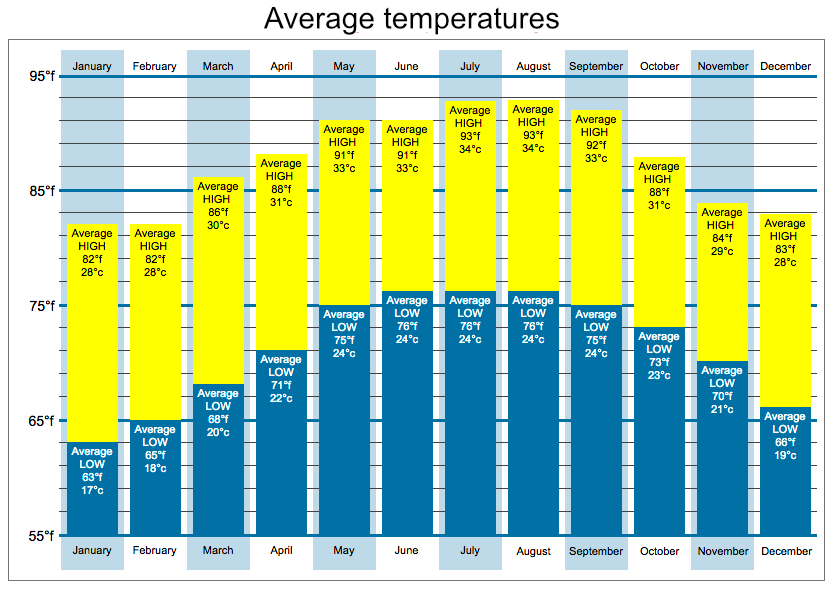
In January and February, the sun is over the southern hemisphere and is not bearing down directly on Isla Mujeres. During these months, air temperature reaches its coolest point, with a high averaging about 82° farenheit (28° celsius). Nights can be cool (63 to 65° fahrenheit, 17 to 18° celsius), especially when you factor in the ocean breeze
During springtime months, the sun’s angle in relation to the earth begins to shift and the heat energy hits the Isla Mujeres area at a more direct angle; average temperatures increase, reaching about 91° fahrenheit (33° celsius) in May.
In July and August, average temperatures reach their peak of 93° fahrenheit (34° celsius).
As the sun angle shifts back toward the southern hemisphere, temperatures drop, with major drop in October and November after the sun has passed into the southern hemisphere.
Nearly constant ocean temperatures help to moderate air temperatures to within about 10° (6° celsius) throughout the year. Nights from December to March can feel a bit chilly due to the ocean breeze.
Rainfall averages by month
What month to travel with the least amount of rain:
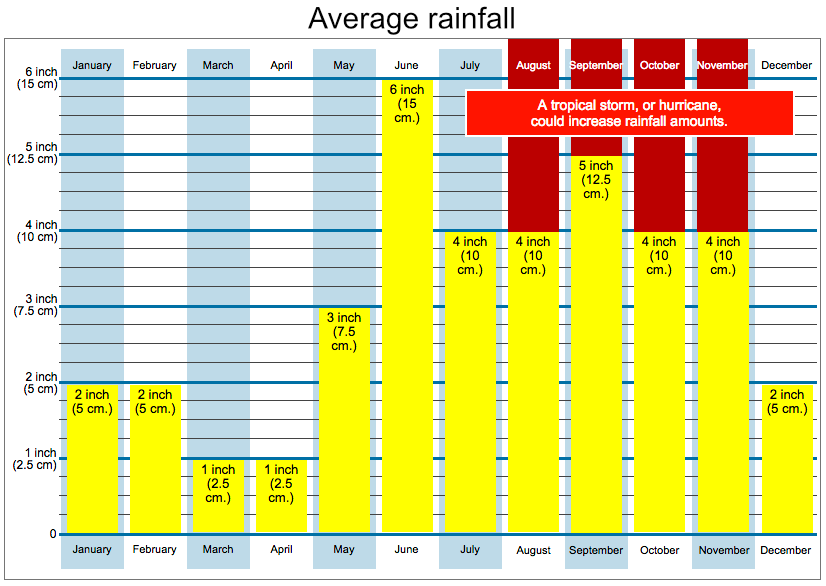
From December to February, you may see a few showers in the late afternoon.. The average 2 inches (5 centimeters) of rain that falls typically will not cause a problem for vacationers. Rainfall is typically even more scarce during March and April, with an average of only 1 inch (2.5 centimeters) during each month.
May sees rainfalls increase, but showers typically take place later afternoon or night. Expect to see about 3 inches (7.5 centimeters) of total rain during May.
June is the beginning of the rainy season, with as much as 6 inches (15 centimeters) of rainfall. Travel in June and you could have a rainy day that keeps you off the beach.
July through November are consistently between 4 to 5 inches (10 to 12.5 centimeters) of rainfall each month, but often that can take place during one week. Your chances of a wash-out vacation increase during this period. Tropical storms, or even the occasional hurricane, can ruin a vacation.
Water temperature averages by month
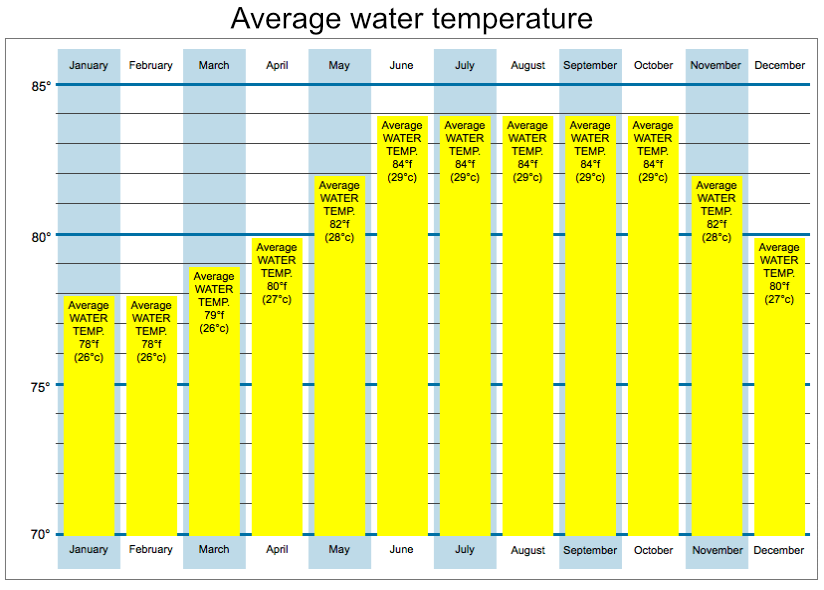
Isla Mujeres is located along a stretch of current that pulls warm water from the equator, up the coastline, then into the Gulf of Mexico. These waters cool along the way, but the water temperatures never drop below 78° fahrenheit (26° celsius) during winter months. During summer months, when the sun is more directly over Isla Mujeres, the water temperature rises to 84°—we love to visit during this time, the ocean feels like bathwater.
These warm water temperatures are also what fuels hurricanes. In fact, hurricanes play an important role in nature. They draw heat from the ocean and spin it off into the atmosphere, helping to regulate water temperatures and protect marine life cannot thrive in hotter temperatures.